

What Happens During an Outage? Solar + Battery Explained
We often talk about the reliability of a solar system with battery backup. But you may be wondering: how does it really work? We get that question a lot.
When you have solar panels on your roof or in your yard, they feed electricity to your home directly when the sun is shining. Any extra power that is generated is sent back to the electrical grid. You then get credits on your electric bill for that power, that are used to offset your power needs for times when the sun isn’t shining, or isn’t shining enough to meet your full household demand for power.
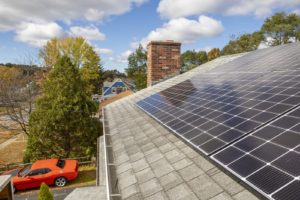 With net-metered solar, the grid is your battery, sending power to your home when the sun is down. We can also add batteries to your solar, giving you all of the benefits of solar net-metering plus you can store energy you generate on-site. This means you can keep the lights on even when the grid goes down.
If the power goes out, your system will detect the grid failure instantly and will switch to backup power in milliseconds, allowing lights to stay on without interruption. It’s likely that you won’t even know that an outage has occurred! Most battery systems store about a day’s worth of power, though you should still manage your use to ensure the battery lasts the length of the outage.
If your outage lasts more than a day, your batteries will begin to recharge when the sun returns. When the sun is out your home will also draw directly from your solar panels, the same way it does when the grid is active.
The best part about a system with solar and batteries is that it all happens seamlessly- no trudging out in the dark to start a generator, and no fossil fuel- just sunshine and technology.